
Lichess
lichess.orgBoard
4.0569.00 Reviews
- Version
- 0.31.8
- Installs
- 5.00M
- Age Rating
- Everyone
Screenshots
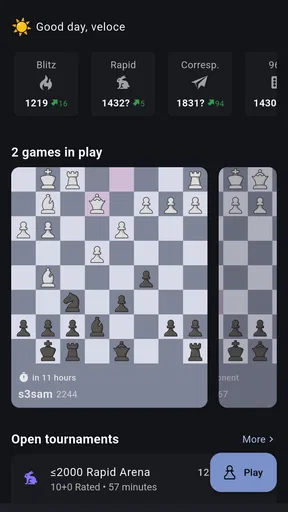
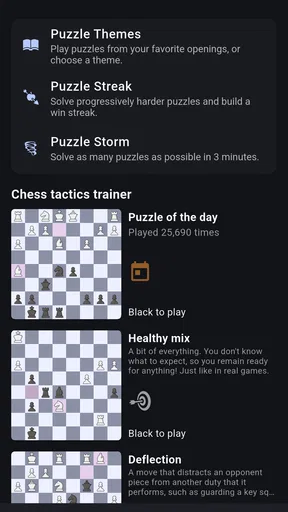
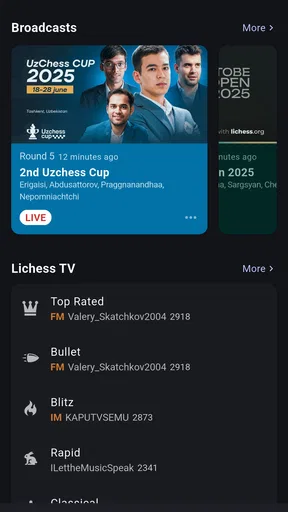
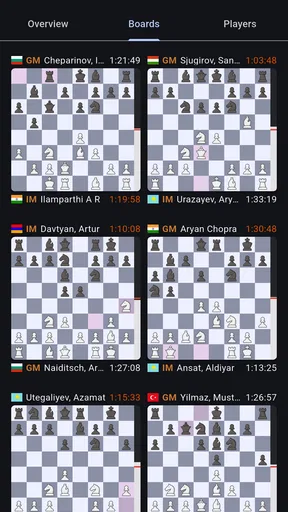
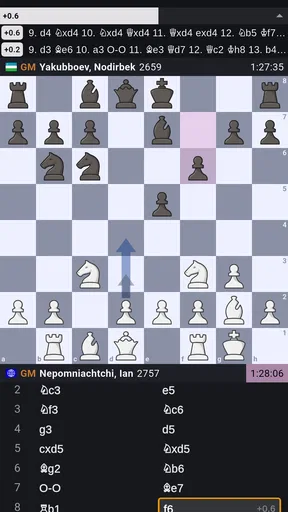
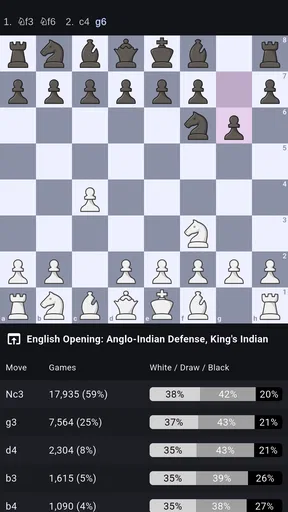
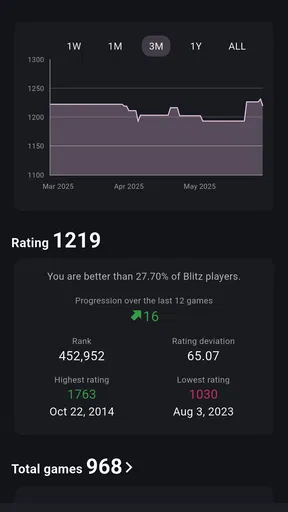
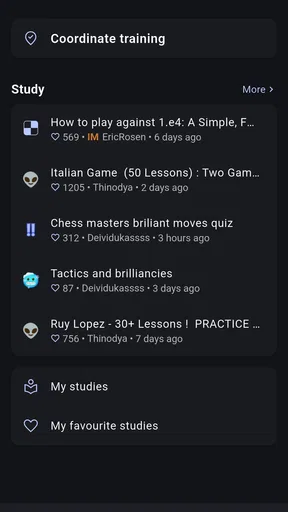
Our Review of Lichess
 Analysis by Appyee
What stood out to me while using Lichess is not simply that it lets me play chess on a phone. The more important capability is the way it brings a serious, open-source chess experience into a free mobile game without making the board feel like a toy. I can use it for a quick game, a focused practice session, or a longer look at a position, and the same basic interface supports all three situations.
That flexibility matters because chess apps often push players toward one narrow habit. Some are built mainly around puzzles, some around lessons, and others around fast online matches. This one feels more like a complete chess environment. It is a board game from lichess.org, aimed at people who want to play and study chess rather than simply pass a few minutes with a casual puzzle.
The app is free, carries an Everyone age rating, and has already reached over a million installs. Its average rating is 3.9 from around fourteen thousand ratings, which suggests a broad audience with mixed experiences rather than a universally perfect fit. I think that is a fair picture: the chess itself is the attraction, while the learning curve and interface density will decide whether each person enjoys it.
Why the open-source approach changes the experience
The central capability here is access to a chess platform that is open source. In practical terms, that makes the app feel less like a storefront designed to keep interrupting a game and more like a tool built around the activity itself. I can open it because I want to play chess, not because I am being guided through a chain of promotional screens or encouraged to spend money before the board becomes useful.
That does not mean the experience is automatically simple. Chess has its own complexity, and a serious chess app needs to expose more information than a casual board game. The benefit is that the complexity is connected to real chess use: choosing a time control, reviewing a move, checking a position, or returning to a game later. The interface asks me to think like a chess player, not just like someone tapping through a mobile game.
I also appreciate the difference between “free” as a temporary invitation and free as the basic model. Lichess is free to use, so the decision to install it does not require comparing subscription levels or deciding which important chess tools are locked behind a purchase. For a beginner, that removes a common source of hesitation. For an experienced player, it means the app can stay installed as a dependable board and playing environment without becoming another recurring expense.
The open-source identity is also relevant for readers who care about transparency and community-built software. It is not just a label attached to the store summary; it shapes the tone of the product. The app feels purposeful and less decorated than many commercial alternatives. I would not choose it for flashy presentation, but I would choose it when I want the chessboard to remain the main event.
A board that works for more than one kind of player
During a normal session, I can approach the app in very different ways. A new player may want to play a straightforward game and concentrate on legal moves, while a stronger player may care about pace, accuracy, and reviewing mistakes. The same environment can serve both, although the stronger the player becomes, the more value there is in learning the available controls instead of treating the app as a simple “play” button.
One useful habit is to separate playing from reviewing. When I am in a game, I try not to turn every move into an analysis exercise. Afterward, I can revisit the critical moments with a calmer mind and ask a more useful question: where did my plan stop making sense? That workflow is more valuable than endlessly replaying an entire game without identifying the decision that changed its direction.
For beginners, I would recommend starting with short sessions rather than trying to understand every part of the app immediately. Learn how to arrange the board, begin a game, resign or finish properly, and review what happened. Once those actions feel natural, the additional chess tools become less intimidating. The app rewards curiosity, but it does not need to be mastered in one evening.
How it feels in everyday use
Imagine that I have ten minutes before leaving home. I can use that time for a quick game, but I need to be honest about the clock. A fast game is not really a ten-minute activity if I also need time to think, reconnect, or review the result. In that situation, a short practice session or a look at a previous game may be a better choice than starting a serious match and abandoning it halfway through.
At night, the opposite is true. With more time available, I can play at a slower pace and focus on planning instead of reacting. The phone becomes a compact chessboard that fits into a quiet routine. I find this more satisfying than using a puzzle-only app when I want to understand how individual decisions connect across a complete game.
Another realistic use is keeping the app ready for an over-the-board game with a friend. Before meeting, I can use it to warm up by playing a few positions or reviewing a familiar opening idea. It does not replace the feel of physical pieces, but it is convenient when a real board is not available. The important distinction is that the app supports preparation; it does not make a casual player automatically prepared.
On a small phone, board visibility and touch accuracy become part of the experience. I prefer holding the device steadily and avoiding rushed taps, especially in fast games. A move that is obvious on a large monitor can feel less comfortable when the board occupies a smaller screen. This is not a flaw unique to this app, but it matters because chess punishes accidental actions more severely than many mobile games.
Making review time actually useful
The strongest workflow for me is not “play as many games as possible.” It is to play one game with a clear intention, then examine the moments where my thinking changed. Did I move too quickly after an opponent’s mistake? Did I trade pieces because it looked safe without checking the resulting position? Did I spend too long on an unimportant move and then rush later?
Those questions turn the app into a learning tool rather than an endless match generator. Even without treating every position as a formal lesson, reviewing the sequence helps me recognize recurring habits. I find that especially useful for players who know the rules but feel that their games collapse for mysterious reasons.
A practical tip is to write down my own explanation before checking any outside assistance or deeper evaluation. First I say what I expected the move to do, then I compare that intention with what actually happened. This prevents the review from becoming a passive search for a “correct” move. The real gain is learning why my original choice failed.
Another non-obvious trade-off is that a powerful analysis tool can sometimes reduce independent thinking. If I look for an answer immediately after every move, I may improve the position without improving my judgment. I get more from the app when I use analysis after forming my own candidate moves. That makes the feature a coach-like aid rather than a replacement for calculation.
Where it compares well with familiar alternatives
Compared with a casual chess game that focuses on attractive graphics and very gentle progression, Lichess feels more direct and less padded. That is a strength if I already know why I am playing chess. A casual alternative may be easier for a child or for someone who wants a highly guided first session, while this app is better suited to a player who wants room to make decisions independently.
Compared with a puzzle-focused chess app, it offers a broader reason to return. Puzzles are excellent for practicing patterns in isolation, but they do not reproduce the pressure of deciding what to do in a complete position. I can use puzzles to sharpen recognition, yet I still need full games to practice time management, planning, exchanges, and responding to an opponent’s ideas. The two formats complement each other, but they serve different purposes.
Compared with paid chess platforms, the free model is its clearest advantage. Someone who wants a polished subscription package with a strong emphasis on guided courses may prefer another service. I would not dismiss that choice: structured lessons can be easier for a complete beginner than exploring a broad chess platform alone. However, if the priority is playing and studying without paying first, this app is unusually compelling.
There is also a social difference between a local two-player board app and an online-oriented chess environment. Playing against a person beside me has a relaxed, conversational quality that a phone cannot reproduce. Lichess is more useful when I want access to chess beyond the people physically near me. That makes it a stronger everyday companion, but not necessarily a replacement for sitting across from a friend.
The friction points I noticed
The biggest limitation is the amount of choice. A player who only wants to tap one button and receive an instantly understandable challenge may feel that the app expects too much initiative. Chess players often appreciate options, but options can become friction when the user is still learning what each choice means.
The visual style is functional rather than lavish. I see that as a deliberate trade-off, not a failure, but people who choose games for animation, sound, rewards, or a strong sense of progression may find the presentation restrained. The app gives me a serious board; it does not try to turn every move into a celebration.
Mobile chess also has an unavoidable concentration problem. Notifications, poor connection, a small screen, or a battery-saving interruption can damage a game that requires attention. I would avoid beginning a longer match when I know I may need to put the phone away. For a commute or a waiting room, a short activity is safer than a game that demands uninterrupted thought.
The current version is 0.26.4 and requires Android 8.0 or later. That makes it accessible to many existing Android phones, but anyone using an older device will need to check compatibility before planning around it. The app is also available as a mobile chess product, so people who prefer a large desktop board for extended analysis may still find a computer more comfortable.
Who will get the most from it
I would recommend Lichess first to players who want one free place for regular chess, occasional study, and serious games without a subscription decision. It is especially suitable for someone who has moved beyond learning how pieces move and now wants to understand why games are won or lost.
It is also a good fit for a returning player. If I have not played for years, I can begin gently, regain board vision, and use my own games to find the weaknesses that matter most. That is more personal than following a generic lesson path because the mistakes come from my actual decisions.
Parents may appreciate the Everyone rating and the absence of a purchase barrier, but I would still help a young beginner learn the interface. The age rating does not remove the need for supervision around online interaction, screen time, or frustration after a difficult game. The app can provide a safe-feeling entry point to chess, but the quality of the experience still depends on how the child uses it.
I would suggest skipping it if the main goal is a highly theatrical game with constant rewards, or if the user wants chess reduced to tiny daily exercises with almost no setup. A dedicated puzzle app may be more satisfying for that purpose. I would also steer away from it for someone who dislikes making choices about how to play and study. The freedom is valuable, but it means the player has to supply some direction.
My final take after using it as a daily chess tool
Lichess succeeds because its most important feature is not decorative: it gives me a serious, free, open-source way to engage with chess on a mobile device. The result is flexible enough for a quick game, deep enough for review, and honest enough to leave the chess itself at the center.
It is not the easiest chess app to recommend blindly to every phone user. Beginners may need time to understand the choices, casual players may miss a more playful presentation, and long sessions can be less comfortable on a small screen. Those are real considerations, not reasons to reject it outright.
For me, the best reason to install it is the workflow it supports: play with a purpose, revisit the moments that mattered, and use analysis to test my thinking rather than replace it. That approach turns a free board game into a practical training companion. With a 3.9 average from around fourteen thousand ratings, it clearly has room to improve for some users, but its core idea remains strong.
If I were recommending one mobile chess app to a friend who wants to play regularly without paying, I would point them here first. I would tell them not to judge it by the first quick match. Give the board time, learn the review habits, and decide whether the focused, community-built style suits you. For the right player, the lack of commercial clutter is not just pleasant; it changes how deliberately you use the app.
Privacy and Permissions
See what permissions an app requests and how it handles your data.
- Other
- view network connections, full network access, run at startup, control vibration, prevent device from sleeping
Verdict
Strengths of Lichess
- Completely free, with no ads or premium subscription pressure.
- Open-source platform with a strong focus on transparency.
- Excellent support for correspondence chess and asynchronous games.
- Puzzles adapt to different themes, including tactics and endgame skills.
- Available on Android, iOS, and web with reliable account synchronization.
Limitations of Lichess
- The interface may feel less polished than some commercial chess apps.
- Beginners can find the number of features and menus overwhelming.
- Some advanced analysis tools require a stable internet connection.
- Puzzle difficulty can change abruptly between consecutive challenges.
- Tournament chats and forums may occasionally contain distracting content.
Similar Picks in This Category
View All
Ludo King®
Gametion4.1

Ludo
Yarsa Games4.6

Tile Master® - Matching Game
Higgs Studio3.6

Checkers Online
CC Games4.6

Dominoes
Loop Games4.7

Chess
Chess Prince4.6
Frequently Asked Questions
What is Lichess, and how does it work?
Lichess is a free online chess platform available through its website and mobile apps. After creating an account, you can play real-time or correspondence games, solve puzzles, study openings, watch broadcasts, and analyze completed games. The interface is focused on chess rather than advertising or unnecessary extras, making it suitable for beginners, casual players, and experienced competitors.
Is Lichess completely free to use?
Yes. Lichess provides its main features without subscriptions, paid tournaments, premium levels, or advertising. You can play rated and casual games, access puzzles and studies, use the analysis board, and participate in tournaments at no cost. The service is supported by donations, so users who enjoy the platform can contribute, but donating is optional and does not unlock exclusive gameplay advantages.
Can beginners use Lichess effectively?
Lichess is suitable for beginners, although its large selection of features may feel slightly overwhelming at first. New players can use the practice section, beginner-friendly puzzles, computer games, opening studies, and analysis tools to improve gradually. The rating system generally matches you with opponents near your level, while casual games allow you to practice without affecting your official rating.
Does Lichess offer chess puzzles, lessons, and analysis tools?
Yes. Lichess includes a substantial collection of tactical puzzles generated from real games, along with practice categories that focus on common patterns such as checkmates, forks, pins, and hanging pieces. Its analysis board can review games with computer assistance, show inaccuracies and blunders, and explore alternative moves. Some advanced engine analysis may require waiting or resource limits.
Can I play Lichess offline or against other players on mobile?
Lichess is primarily an online chess service, so an internet connection is needed for live games, tournaments, multiplayer matchmaking, broadcasts, and synchronized account features. The mobile app is useful for playing against online opponents and reviewing chess content, while some board and analysis functions may remain available locally. Offline play is more limited than the full online experience.
Play our best games!


